

The Cost of Looking Away
On observation, inherited stories, and what reality reveals when we remain long enough to see it

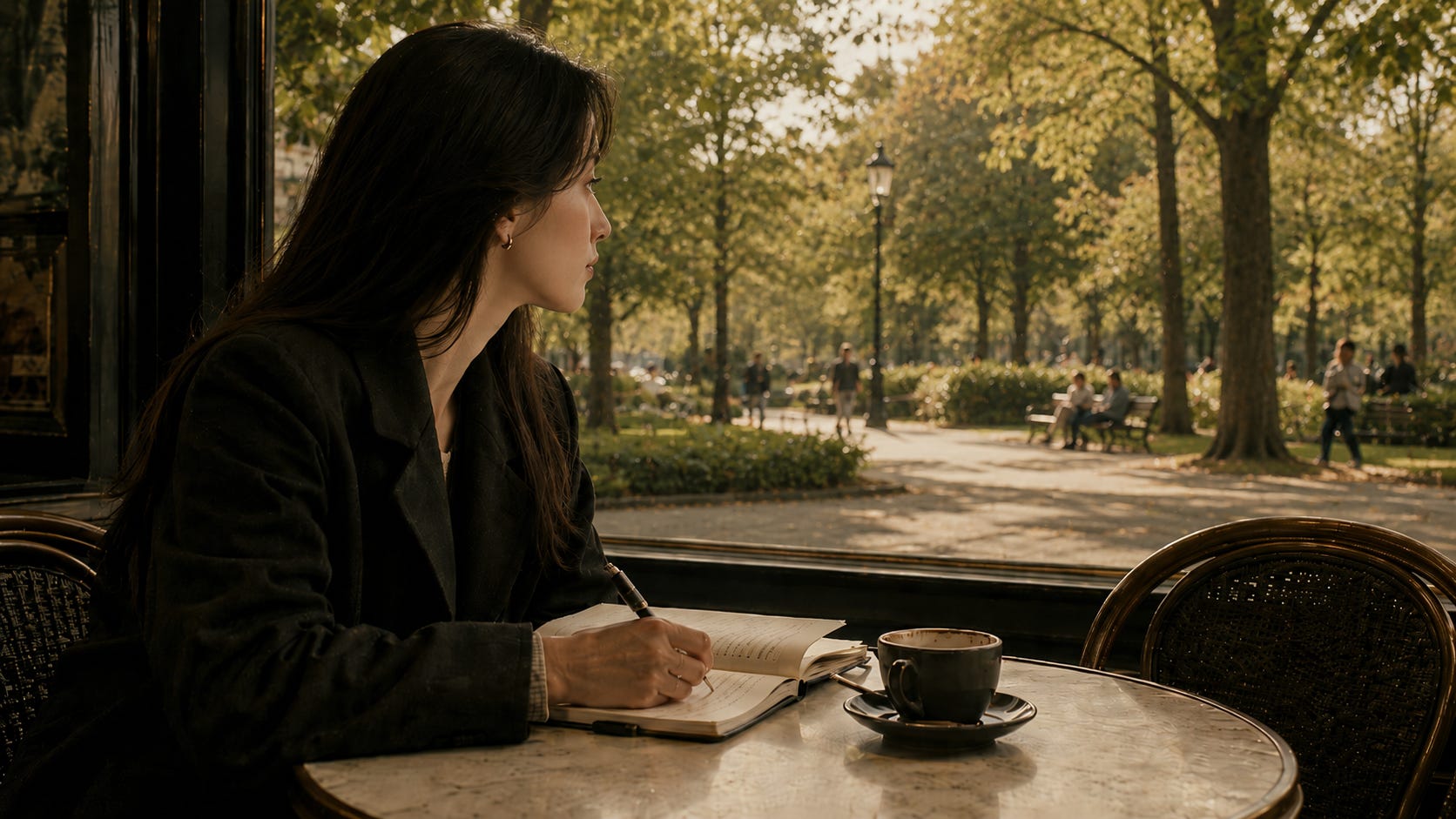
I have come to believe that observation is not just linked to personality traits. For image consultants, marketers, artists, and travelers, it is a professional skill. It is also a way of questioning the stories we have inherited about other people, about places, and sometimes about ourselves.
Learning to watch from a distance
I began observing people before I understood that observation could be useful.
Being bullied for my complexion made me self-conscious as a child. Social anxiety followed, and I often found myself watching events from a quiet distance rather than being part of them.
I would not romanticize that experience. I did not choose it as a form of training. But over time, I began to notice what distance allowed me to see.
When you are not concentrating on being seen nor heard, you pay attention to how people speak to one another. You notice who becomes warmer around someone powerful and colder around someone vulnerable. You see how a group can alter the behavior of the people within it. You begin to recognize the distance between what people say they value and what they reward.
Maybe you have experienced your own version of this. Perhaps you were the quiet person in the room, the newcomer in a social circle, or the outsider trying to understand rules everyone else appeared to accept without question.
Observation often begins there: not with certainty, but with the feeling that the first explanation does not account for everything.
Watching carefully does not make us infallible, though. Observation teaches us to pause before treating our first impression as the truth.
That pause matters in every profession that deals with people.
The person behind the information
In image consulting, visible facts matter. A person’s coloring, proportions, profession, environment, and daily routine all affect the advice we give.
But none of them can tell the whole story.
A profession does not reveal how someone wants to be perceived. Income does not reveal taste. Age does not determine character. Two people can have similar bodies, careers, and wardrobes while wanting entirely different lives.
This is why I see categories as starting points rather than conclusions.
A client may say she needs more professional clothing, but “professional” can mean many things. She may want to appear more authoritative, more creative, more mature, or less easy to dismiss. She may be preparing to enter a new room, or she may simply want to feel like herself inside the room she already occupies.
The information matters, but the motivation gives it meaning.
I learned the same lesson through marketing.
A former client once said she had expected me to tell her which brands to buy so she could look attractive. Her disappointment clarified something I had already begun to suspect. She was not only asking for clothes. She was asking for a recognizable shortcut: the assurance that the right label could settle the question of taste. But brands can reveal financial capacity without revealing character, judgment, or even beauty. The useful question was not which names she could afford. It was what she hoped those names would prove.
When honesty feels unkind
Observation becomes difficult when what we see may hurt someone.
In image consulting, honesty cannot be separated from care. Every client deserves dignity. And they also deserve useful information about whether their choices support the result they want.
The temptation is to confuse kindness with reassurance.
Reassurance is easier. It allows the professional to avoid an uncomfortable conversation and the client to leave without having to reconsider anything. But withholding an observation does not always protect the person in front of us. Sometimes it protects the adviser from having to express the truth with tact.
There is a difference between judging a person and assessing a choice.
A garment can be ineffective without the woman wearing it being inadequate. A decision can work against someone’s aims without becoming a verdict on her worth. The task is not to soften every observation until it becomes useless, nor to treat bluntness as proof of courage.
The harder work is to be accurate without becoming cruel.
Looking away may spare everyone discomfort for a moment. It may also leave the client to discover the same truth later, in a less generous room.
The city I was taught to fear
When I was a child, Buenos Aires was used as a threat.
If I misbehaved, I was told I might be sent there. Before I had ever crossed the Río de la Plata, the city existed in my imagination as a place of punishment.
Then, as a teenager, I began watching more Argentine movies.
The story I had been told no longer made sense. Buenos Aires did not look alien or frightening. The houses, streets, and neighborhoods on the screen often resembled the ones in which I had grown up. The city felt strangely familiar before I had ever visited it.
Buenos Aires eventually became the destination of my first trip abroad. It has since become one of my favorite places in the world.
I find it impossible to feel bored there. Its streets offer too much to look at, and its cultural life fuels your thoughts. Even during difficult periods, there remains a visible commitment to beauty. Its monuments, parks, buildings, bookstores, cafés, and public spaces are not treated as irrelevant luxuries.
That commitment stayed with me.
A clean square or a preserved monument tells people that their surroundings matter. It suggests that what came before them is worth preserving and that public life deserves care.
I notice the effect of that care on people too.
In places where public spaces are maintained, people often walk with more calm. They look ahead. They seem to expect something from the city and from themselves. When neglect becomes the norm, movement changes. People hurry through places they no longer expect to enjoy. They stop looking around because they assume there is nothing worth seeing.
Do cities shape the posture of their residents, or do residents shape the posture of their cities?
Buenos Aires also taught me how easily a place can be distorted by a story told before we are old enough to examine it.
A city I had been taught to fear became one of the places where I feel most alive. The story disappeared when I finally looked for myself.
How many inherited opinions would survive the same test?
Why I carry a notebook
In Córdoba, I once sat near a public square long enough to realize that people were not treating it as a corridor between one obligation and the next.
An older couple remained on a bench without speaking. A woman adjusted her coat before continuing down the path. Office workers crossed the square without the defeated haste I had learned to associate with neglected public space. People looked ahead, but they also looked around.
Nothing dramatic happened.
That was what interested me.
None of it would have justified stopping for a photograph. Yet together, those small gestures told me something about the city. The square was not merely preserved for visitors. It belonged to daily life. People expected to spend time there rather than escape it.
When I sit somewhere long enough to write, I begin to notice who occupies the public space and who seems excluded from it. I see how people greet each other, how long they remain, how they dress when they are not posing, which buildings receive care, and which forms of disorder have become so familiar that no one responds to them anymore.
A monument can be beautiful, but I also want to know what happens around it.
Do people gather there? Do children play nearby? Does anyone look up? Is the place part of daily life, or is it only an object visitors are expected to record before moving on?
A notebook makes me remain long enough to notice the life surrounding the landmark.
It keeps me from treating travel as collection.
There is a difference between returning with proof that you have been somewhere and returning changed by what you noticed there. Stillness can make an unfamiliar city reveal itself. It can also make a familiar neighborhood strange again.
When observation changed my mind
For some time, I believed that building a public presence required constant self-exposure.
The advice seemed unanimous: show your face, share your outfit, photograph your coffee, document your day, and remind people that you exist.
I never felt a natural desire to do this. I did not want to turn every outfit I wore or every coffee I drank into public material. Because the advice was so common, I assumed my reluctance was a professional weakness.
Then I began looking more closely at the people I admired across different disciplines.
Many of them did not post selfies every day. Their authority did not depend on documenting their meals, outfits, or routines. They offered stories, observations, and ideas that remained with me after I closed the browser tab.
That realization was part of what brought me back to writing, and what I tried to explain in Chapter 2.5.
It also forced me to reconsider the difference between visibility and substance.
A person can appear constantly and leave little behind. Another can speak less often and still change how people see.
When I think about the people I remember after scrolling, they are rarely those whose faces appeared most frequently. They are the ones who left me with a thought I could not dismiss.
The distinction would have remained invisible had I continued repeating the accepted advice.
Curiosity, discipline, and courage
I think observation begins with curiosity.
Curiosity makes us wonder whether there is more to see. It allows a person, place, or situation to remain unfinished in our minds.
Discipline gives that curiosity a purpose. It asks us to keep watching, compare our impressions, and notice when the evidence no longer supports the story we preferred.
Then courage asks us to do something with what we have seen.
Sometimes that means sharing an unpopular observation. Sometimes it means telling a client the truth with care. Sometimes it means changing our own mind and admitting that advice we once repeated no longer seems convincing.
This may be the most difficult part.
We often assume people refuse to see because they lack information. Sometimes they are afraid of what seeing would require.
A clear observation may disturb a comfortable life. It may demand a different habit, a harder conversation, or the abandonment of an identity that once felt safe.
Looking away offers temporary relief.
But it carries a cost.
We may give advice to the category instead of the person. We may visit a city only to confirm what we had already heard about it. We may confuse exposure with authority, permission with wisdom, and familiarity with truth.
The loss is not simply that we miss an interesting detail.
We lose the chance to correct our judgment.
As a child, I watched from a distance because entering the scene felt difficult. I could not have known that the same distance would one day become part of my work.
Buenos Aires was distant too: a city described to me before I could look at it for myself. Years later, I crossed the river and found familiarity where I had been taught to expect punishment.
The story did not survive the encounter.
I still wonder how many of our judgments begin that way—not with what we have seen, but with what someone else taught us to see.
Some of them may remain with us for years, shaping what we avoid, what we dismiss, and what we never examine closely enough to love.